
Indie game storeFree gamesFun gamesHorror games
Game developmentAssetsComics
SalesBundles
Jobs
TagsGame Engines

Ryan Pond

310
Posts
19
Followers
73
Following
A member registered Jun 29, 2026 · View creator page →

Creator of

Recent community posts

Glad I came back to try the update! I kept getting caught by the first gator during the jam, so it was fun to finally get past it. The move that worked was dropping a frog aura by the pond on the right while the real frog slipped around the rocks on the left. Made it to 94 on that run.

That was exactly the kind of interaction I was hoping to find after our chat during the jam. Having enough time to try a decoy made a big difference. Thanks for coming back to this one after the jam!

That time definitely paid off. The trees framing the pond made such a difference, and then the fog brought it all together. I could see the improvement immediately, but I don’t think I would have recognized what was missing before you showed me.

Had a blast working with you too, man. Really glad we got to make this one together!

Congrats on finishing your first solo project! There’s definitely a lot here to be proud of.

The shadow mechanic especially feels like an idea worth continuing to explore. And I’m glad I wasn’t imagining the Navi / Shadow of the Colossus connections 😄

The shared fuel supply is the strongest part for me. Spending fuel on the handheld light means having less to put into the pumpkins, so choosing a route and deciding which lights to maintain gives the game a useful bit of strategy.

Watching a pumpkin’s safe area grow after refueling is satisfying, too.

The Controls and Help screen is useful, but I’d bring a little more of that information into the playfield. A hold-to-refill prompt when I’m in range, plus a small fuel indicator on each pumpkin, would make it much clearer when I’m helping one and which one needs attention. A more obvious cue when I’m taking darkness damage would help as the green light pools shrink.

My biggest improvement would be a separate game-over screen. After my first run ended, I got the pause-style menu, and Continue immediately brought it back. Showing the final survival time, a personal best, and a Retry button would give the end of a run more payoff.

There’s a good foundation here. Making the resource decisions easier to read would help the core loop come through much more clearly.

The lantern mechanic was the standout for me. Having to give up the light to find memories creates a good reason to put yourself in danger, and the fireplace going dark along with the lantern is a great touch. Examining familiar objects under different conditions and finding new meaning in them was satisfying.

The house has a consistent atmosphere, too. The worn wallpaper, rain at the windows, and warm lantern against the cooler outside light work well together. The visitor changing her approach between nights gave me a reason to keep questioning what was happening.

My biggest suggestion is to keep “Open the door” on a fixed key, or give it a separate confirmation. It changes numbers as questions disappear, which could turn an intentional conversation choice into an accidental major decision. I’d also make the first memory discovery a little clearer so players understand what successful investigation looks like early on.

There’s a strong foundation here, especially in the tension between what the house reveals and what the visitor tells you.

Thank you! I’m really glad the atmosphere and emotional side of it came through.

I wanted the Halloween feeling to come more from the quiet, the darkness, and the sense that something unusual could happen on this one night, rather than from jump scares or anything especially aggressive.

And the bittersweet part was probably the most important piece for me. The game was inspired by my grandmother, so I wanted the spirits and their stories to feel less like “ghost encounters” and more like brief moments with people who are gone but still matter.

Really appreciate you taking the time to play it and write this.

Thank you for the detailed feedback!

You hit two things that have come up a few times now.

The retrieve control is there with right-click, Backspace, or B on controller, but the game does a poor job of telling you that when you actually need it. I definitely think a contextual “retrieve” prompt after a bad cast would help.

And I agree on the tension system. The release-for-slack mechanic was intended to matter much more than it currently does, but I didn’t get enough time for a proper balancing pass. Right now it’s too forgiving, so holding the reel down works far more often than it should.

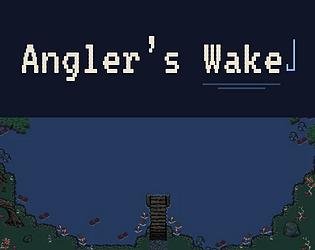
I also really appreciate the comments about the atmosphere and little details. The fog, ripple effect, custom cursor, spirit designs, and overall quiet/lonely feeling were all things we spent a lot of time trying to get right, so it’s great to hear those landed.

Thanks for squeezing it in before the jam ended!

Glad the feedback was useful. I think there’s a good mystery underneath it, and I’d be interested to see where it goes with a little more time for the connective pieces.

Visually, this is one of the strongest jam entries I’ve played. The tower, forest, lighting, fog, weather, and overall presentation look excellent, and the sound design supports that isolated watchtower atmosphere really well.

I also like the premise. Keeping the equipment running, listening to the radio, maintaining the stove and generator, and watching for something in the forest all fit the theme extremely well.

Where I struggled was with the moment-to-moment interaction.

A lot of the game became a schedule of tasks for me: do this during this hour, check that during the next, gather supplies in between, then repeat the routine while watching for small changes. I know there’s an audience that really enjoys that kind of procedural night-watch gameplay, but it was hard for me to stay engaged with it.

Part of that was because some of the physical interactions didn’t feel as smooth as the presentation suggested they would. Opening and closing the hatch was one example. Small actions like that felt slightly awkward, which made me more aware that I was operating game objects rather than inhabiting the watchtower.

That matters a lot in a game built around routine. If the main activity is repeatedly interacting with the same equipment, I think those interactions need to feel especially tactile and effortless so the routine itself becomes satisfying.

I had a similar feeling with movement. The environment looks very grounded and believable, but my character movement sometimes felt disconnected from it. I occasionally had that sensation I get in some older Bethesda games where the world and the character both work individually, but movement doesn’t quite make me feel physically planted inside the space.

I think tightening those interactions would help the routine become more immersive. Things like smoother hatch movement, more responsive object handling, stronger audio or animation feedback when equipment changes state, and little physical reactions from the environment could make completing the tasks feel more satisfying.

The presentation definitely made me want to like this more than I ultimately did. There’s clearly a lot of atmosphere and structure here, and I can see the appeal of watching the routine slowly become less safe as the nights progress.

For me, the missing piece was making the repeated work itself feel engaging enough that I wanted to keep doing it long enough to see those later changes.

That makes sense, and I actually like that the clicking becoming less important was intentional.

I think that part works as a progression signal—you’ve built enough of an operation that you personally don’t need to do the grunt work anymore. The piece I was missing was just something new to take its place once that happens.

I like the idea of earlier-night information affecting the next day too. That seems like a good way to keep the player making decisions even after the gravediggers are doing most of the collection for them.

And yeah, four days is brutal for balancing something with this much progression. The fact that the systems all worked and carried through to an ending is already a lot for the timeframe.

Thanks for the feedback!

I agree on the reeling meter. The intent was for the tension/alignment to matter more, but I didn’t get enough time for a proper balancing pass before submission. In practice, it’s too forgiving, so you can mostly ignore it and still land the fish.

Glad the music landed for you, and thanks for playing!

This was one of the more ambitious jam entries I played. Trying to build a quiet 3D adventure with environmental storytelling, a talking lantern, and a mechanic built around physically pulling shadows out of the world is a lot to take on in 96 hours.

The atmosphere was probably the part that worked best for me.

The world felt very quiet and isolated, and the lack of music actually helped that. It reminded me a little of the emptiness and scale of Shadow of the Colossus, with the lantern filling that companion/information role that made me think a bit of Navi from Ocarina of Time.

I really liked the core shadow mechanic too. Pulling a shadow free and then repurposing it as something physical is a strong idea, and I could see a much larger puzzle game being built around it.

Where I struggled was the manipulation itself.

Once I had a shadow, there were a lot of controls involved in placing it correctly: moving it, rotating it, stretching it, changing its proportions, and lining it up very precisely. That gave the system a lot of flexibility, but it also made some puzzles feel harder because of the controls rather than because I was solving something difficult.

I think some snapping or contextual assistance would help. If I’ve clearly figured out that a shadow belongs across a gap, getting it close to the correct size and position could cause it to settle into place. That would preserve the puzzle of understanding what to do without making exact transform controls the final challenge.

The same complexity made controller play feel awkward to me. There are enough separate manipulation commands that keyboard and mouse felt better suited to the current system.

Visually, the environments supported the lonely atmosphere fairly well, but I felt a disconnect between the serious tone and some of the character/cutscene presentation. The opening especially had a much simpler visual style than the mood of the story suggested. If the game continues development, I think a more cohesive visual direction would help the world and narrative land more strongly.

Audio was mixed for me. I actually liked the absence of music, because the silence gave the environment some tension. Some of the sound effects were harder to place, though. There was one recurring sound that reminded me of a trap door or heavy object closing, and I often couldn’t tell what event had triggered it. More spatial or contextual clarity there would help.

There’s a real concept here.

The shadow mechanic, the lantern companion, and the quiet world all feel like pieces of something that could become much more interesting with more time. For me, the next step would be reducing the friction in manipulating shadows and bringing the presentation closer to the tone of the story.

There is a lot here, and visually this is one of the more polished jam entries I’ve played. The environments look good, the supernatural fish have some fun designs, and the audio supports the quiet nighttime atmosphere well.

I also liked the idea of temporary fishing schools appearing in the water. Having a glowing area where rarer fish might show up gave me a reason to pay attention to the lake instead of casting anywhere.

Where the experience lost me was the core fishing loop.

Being able to move the targeting circle anywhere on the water and then cast directly to that point made the charge mechanic feel unnecessary to me. I was holding to build power, but the cast was already going where I had placed the target, so I didn’t feel like I was developing any skill around distance or placement.

The reeling itself was more intuitive. Holding to reel, watching tension rise, and releasing to give the line some slack made sense immediately.

What confused me was the additional connection meter. I understood the tension display and the distance/progress bar, but I never developed a clear understanding of what I was supposed to do differently because of the connection meter.

It mostly felt like another thing to monitor rather than another meaningful decision.

That was a recurring feeling for me throughout the game. There are fish to collect, a journal, ingredients to gather, bait to craft, different lakes, moon phases, temporary schools, and other systems layered on top of the experience.

Conceptually, that sounds substantial, but I never became invested enough in the basic fishing to want to explore all of that depth.

I think I would rather have seen fewer systems with more depth in the fishing itself.

For example, casting accuracy, fish behavior, bait choice, tension, and positioning could interact more strongly so that catching different fish requires noticeably different approaches. Then the journal, crafting, and moon-cycle systems would feel like tools that help me master that central activity rather than additional things to keep track of.

I also had some interface issues in the browser. Right-click camera control was awkward when the cursor left the game area, fullscreen did not work properly for me, and several HUD/text elements could still intercept or select with the mouse.

With so much information already on screen, those small usability issues made the interface feel busier than it needed to be.

The presentation is strong, and there are clearly a lot of working systems here. For me, the missing piece was a fishing loop compelling enough to make me want to dig into all of those surrounding systems.

There’s a fun premise here, and I liked the idea of having only 30 seconds each night to build yourself up, search the town, and eventually find the vampire hunter.

The 3D presentation also gave me a bit of a Dragon Ball Xenoverse feeling, especially with the third-person camera, music, and the way encounters happen around town.

Where I struggled was understanding the progression.

Most of my nights became the same loop: run around, collide with the ghost-costumed characters until they disappear, gain experience, and spam E at houses looking for the hunter’s hideout.

Leveling up clearly made those encounters easier.

At first, it took several hits, then fewer, and eventually one. But beyond that, I didn’t feel like I was getting meaningfully closer to the larger objective.

I eventually reached a point where I felt like I had checked every house I could find and still had no idea whether the hideout had spawned, whether I had missed it, or whether I needed to reach some specific level first.

Some kind of progression feedback would help a lot. For example:

  • how many possible houses are left to check
  • whether the hideout can currently be found
  • what level or condition is required before challenging the hunter
  • a clearer indicator when a house has already been searched

Without that information, the repeated 30-second nights started to feel more like repetition than progression.

I also ran into several collision issues and fell through the map multiple times. That made exploring the town harder, especially when I was already trying to search quickly before the timer expired.

Controller support also felt incomplete. Movement worked with the stick, but I still needed the keyboard for most interactions.

I think the basic idea could work well with a stronger sense of forward momentum. The short-night structure is a good fit for repeated runs, but each run needs to make the player feel like they learned something, unlocked something, or moved measurably closer to the hunter.

As it stands, I could see the larger game the page was describing, but I never really reached that experience during play.

Building a tower-defense game as an actual Game Boy Advance ROM was immediately interesting to me. I downloaded an emulator specifically to play it, and the presentation really does feel like something built for that hardware.

The music and sound effects especially fit that era well.

I also liked the day/night structure. Having the daytime to place and upgrade defenses and then starting the nighttime parade makes the theme part of the actual game loop. “It only comes out at night” is doing mechanical work here rather than just describing the setting.

I played two fairly long runs, and my best was around Night 6 of 10. It’s definitely challenging, but I think the bigger difficulty for me was understanding enough of what was happening to improve my strategy between attempts.

There were enemies whose behavior I couldn’t quite read.

In particular, I encountered one that appeared to have no health remaining but continued moving down the path while my defenses kept attacking it. I couldn’t tell whether it was bugged, had some special ability, or was intentionally acting as a decoy.

If that is a special enemy behavior, some visual feedback would help distinguish it immediately.

That became more important because of the size of the map. I like the idea of defending something larger than a single screen, but on the GBA-sized viewport I could only see small portions of the defense at once. Moving around the map also happens in fairly noticeable screen shifts, so I often felt like I was checking disconnected snapshots rather than monitoring one battle.

Because of that, I sometimes knew that my defense was failing without really understanding where or why it had started failing.

A little more global information could help.

Even something simple like indicators at the edges of the screen showing where enemies are getting close to the pumpkins, where a lane is leaking, or where a special enemy is currently located could preserve the large battlefield without requiring the player to see all of it simultaneously.

I also struggled to understand the full tower system during play. I mostly felt like I was placing variations of the same defense and trying to find better positions. If there are different tower types or evolution paths with different roles, making those distinctions more obvious in the UI would give me more to strategize around.

The core idea is solid, and getting a functioning tower-defense game onto GBA hardware during a jam is a cool technical accomplishment.

For me, the biggest opportunity is making the information required to make good strategic decisions as readable as the underlying systems.

I really enjoyed this one. The lantern-as-a-weapon mechanic worked well, and I liked how much of the combat was about managing distance rather than attacking directly. I was constantly trying to keep enemies inside the damaging light while staying just outside their reach, which gave the fights a nice survivors-style tension.

The day/night structure worked really well too. Survive the night, then choose a route, visit the shop or gamble on one of the alternate locations, then head into the next encounter.

The branching map reminded me a little of Slay the Spire, and I liked having small decisions between the combat sections instead of simply moving from wave to wave.

The boss was probably my favorite part of the design, even though I never managed to beat it. It built naturally on what the earlier nights had already taught me. I was still managing spacing and keeping enemies in the lantern, but now I also had projectile waves to dodge, summoned ghosts providing my lantern fuel, and the boss able to pull uncollected souls away from me.

It added difficulty without suddenly changing the rules of the game.

Visually, I thought this looked great. The pixel art was cohesive, the forest atmosphere worked, and the overlapping light circles gave the lantern a distinctive look.

The audio supported everything nicely too, with music that fit the tone without becoming distracting.

The theme integration was especially strong. The monsters only appearing once darkness falls, while daytime is used for traveling, shopping, and preparation, made “it only comes out at night” part of the actual structure instead of just the setting.

I did run into two interface issues.

The fullscreen option didn’t seem to work correctly for me. Toggling fullscreen in the game settings didn’t make the itch embed fullscreen, and the embed’s fullscreen control didn’t seem to change that either.

Controller support also felt partially implemented.

Movement with the stick felt good, and A worked for some world interactions, but I couldn’t confirm menu choices or route selections with the controller. I could move between options, but then still had to press E on the keyboard or use the mouse to actually select one.

If full controller support is intended, carrying the same confirm action through menus and the route map would make it feel much more complete.

Overall, this was a strong jam game. I made it to Night 3 consistently after a couple of runs, and even though the boss beat me every time, I kept wanting another attempt.

Thanks for explaining that! Knowing that some clues can be true and relevant without being enough to prove the case helps me understand the result I got.

The separate feedback for the suspect, motive, and each evidence card sounds like exactly what I was looking for. I wanted to understand where my reasoning fell short so I could go back through the clues and reconsider my choices. Seeing why a particular card didn’t hold up would make another attempt feel much more purposeful.

I really enjoyed how the café and investigation fed into each other, so it’s good to hear you’re continuing to develop it. Thanks for taking the time to explain!

Thank you for taking the time to write this! I’m glad the fisherman’s advice landed after you’d just learned when to let go of the reel. I really like your description of the pond keeping the conversation private.

The short-cast feedback makes sense. Having the game keep saying to wait for a bite while the retrieve control is tucked away in the page instructions makes that situation confusing. A retrieve hint beside the waiting prompt would help.

The tension feedback is helpful too. Knowing you were watching the diamond gives me a clearer picture of where the cue needs to reach you. A small response on the line itself sounds worth exploring.

Carrying Auto between spirit conversations also makes sense, especially once you’ve chosen how you want to read the dialogue. I like your suggestion of keeping the goodbye as a deliberate button press.

Thanks for playing!

The character art during the nighttime visits was the highlight for me. The pixel-art views through the peephole looked excellent, and the illustrated portraits after opening the door were really well done.

I also liked the different text sounds. Using the news-style beeps for broadcasts and typewriter sounds for regular conversations made those two kinds of information immediately distinguishable. That was a thoughtful detail.

I played twice and took notes on what the characters said about themselves and each other. I was looking for contradictions and trying to use those conversations to decide whom I should trust when they came to the door.

Where I struggled was connecting that information to the outcome.

One of the final reports pointed toward someone whose involvement I hadn’t been able to piece together from the earlier conversations. I couldn’t tell which details I had misunderstood or what evidence was meant to lead me there. How are those conversations intended to connect to the final reveal? Some explanation at the conclusion would help me understand the reasoning and what my choices affected.

The daytime conversations and nighttime visits also felt a little disconnected.

After speaking to people around town, some of the later interactions felt like I was meeting them for the first time. A recognizable character detail or a brief acknowledgment of our earlier conversation could help connect those scenes. The door artwork made such a strong impression that I wanted more of that character identity to carry through the exploration section.

Both outcomes I reached also left me on a black or red screen with the music continuing. I was unsure whether I had reached the end or whether something else was supposed to happen. An explicit ending screen with a brief resolution and a replay or main-menu option would give the experience a clearer finish.

I was willing to investigate and compare what people told me, but I wanted a stronger sense that those discoveries were helping me make informed decisions at the door. That connection would have helped me stay more invested in the mystery.

I had a good time with this. Splitting the survivors-style gameplay into daytime preparation and nighttime combat gave it a nice rhythm. Robbing graves, finding chests, and deciding how to spend my coins gave me something useful to work toward before the next fight.

I played as the Warrior and Axe Thrower, and both felt well-balanced for the encounters. I liked being able to extend the Warrior’s frontal attack with range upgrades. The Axe Thrower’s reach gave me a different way to approach the boss, since I could kite the smaller enemies and keep aiming throws toward it while moving around the fight.

The progression worked well for me too. Between buying upgrades and keys at the shop and choosing from the three-option upgrades during combat, there were several ways to improve my character. The increasing number of enemies kept the nights challenging, and the combat itself felt solid.

I also appreciated the indicators for the boss and the shop. Being able to keep track of both from a distance was helpful when moving around such a large map, especially while trying to manage the enemies around me.

The grave-robbing setup fits the day/night structure well. Gathering resources during the day and then dealing with the dead at night gives the preparation phase a clear purpose and makes good use of the theme.

The main issue I ran into was performance in the browser. Later nights slowed down quite a bit as more enemies and activity filled the map. That became frustrating during the busier fights, when I was trying to keep moving around the crowd and maintain my attacks on the boss.

I’d really appreciate improvements to performance in those later nights, and I’d also like the option of a downloadable Windows build. The combat and progression were engaging enough that I wanted those larger encounters to feel as smooth as the earlier ones.

That makes sense! Getting a jam game finished around work can be a challenge in itself 😅

Interesting to hear that directing the fae at specific enemies was something you’d already been working on. I enjoyed checking it out, and I appreciate you taking the time to explain!

I played through to the ending and thought this was a very polished entry. The visuals and sound worked well, the controls were straightforward, and everything ran smoothly for me.

The upgrades made a noticeable difference to the gravediggers. Increasing their movement speed, collection speed, and bone yield gave a clear sense of progression.

I also liked the risk/reward element of the dice encounters, especially with the bones I kept being available for upgrades afterward.

My main issue was how quickly that progression overtook the challenge. Once I had a few upgrades, the gravediggers were producing enough bones that my own clicking felt increasingly irrelevant. Each click still earned one bone while the workers were collecting much faster and earning more from each action.

Before long, their output was comfortably ahead of what I needed for the nightly payments.

At that point, I had very little left to actively manage. The upgrade options improved different things, but they seemed to lead toward the same outcome of producing more than the game required.

I noticed something similar with the map. I spent most of the game keeping the summoning plot in view so I could add another gravedigger whenever the cooldown finished. The workers could safely collect without my supervision, so I had little reason to follow them or explore the rest of the graveyard. I reached the ending without really needing to look around the whole map.

I think a balancing pass could help maintain the pressure as the workers become more capable. I’d also like another layer of decisions to develop alongside that growth. Once the workers take over collection, having something new to consider would help keep me involved.

For example, a bargain with the monster could change which graves are most valuable the following day, giving me a reason to look around the map and adjust my approach. Something along those lines could connect the nighttime decisions more closely to what I do during collection and give the game a more distinctive rhythm as it progresses.

I enjoyed the summoning setup here. Having to keep myself alive while the fae handle the fighting is an interesting approach to combat. The pixel art is readable, the characters animate well, and the music fits the old-school presentation nicely.

I played the updated version and made it through several maps and fights. The dash worked and added a lot to moving around enemies, especially with such a simple control layout. It eventually got harder than I could manage, so I wasn’t able to finish.

The part I kept questioning was how the summoning restrictions work together. Between mana, the two-fae cap, and what appeared to be summon cooldowns, I felt quite limited in how I could approach a fight.

I’d be curious to try a version where mana carries more of that balancing. Spending heavily on a larger group could be a risk, because losing that group might leave me without enough mana to replace it. Alternatively, I could conserve mana and keep a smaller group going by carefully timing replacements. That seems like it could create some interesting choices about how much to commit to each encounter.

The archers felt noticeably less effective than the melee fae. Their range seemed to keep them alive, but I had trouble seeing their attacks make much impact. I couldn’t tell whether that was an intentional damage tradeoff or whether some shots weren’t connecting. I ended up using two melee summons because they cleared enemies much faster.

I also liked being able to click to direct the fae, but I struggled to get them onto the enemies I wanted to prioritize. They would stay occupied with a slow melee enemy I could outrun or dash away from while a dangerous ranged enemy kept shooting at me, even when I was trying to direct them toward it.

Since the fae are my only way to deal damage, I’d like clicking on an enemy to give it clearer priority. That would let me use the summons more deliberately while I’m dodging, especially when choosing which enemy needs to go down first.

I went into this expecting a fairly straightforward cozy café game, and it ended up having a lot more depth than I anticipated. I played through the whole thing twice.

The daytime café worked really well on keyboard. Once I started remembering recipes as little number sequences, I could really pick up the pace. Those ingredient hotkeys made a big difference when several customers were waiting. I tried the controller too, and everything worked as expected, but direct ingredient entry on keyboard suited the timed orders much better for me.

I really liked how the daytime earnings connected to the nighttime investigation. Making money and collecting tips let me refresh the magical ingredients, then making the right drinks at night earned information for the case.

Having patrons pay with secrets and rumors was a fun way to connect serving drinks to learning about the town.

The progression of the nighttime recipes was one of my favorite parts. On the first night, the highlighted words help you learn how emotions connect to ingredients. The second night takes those highlights away, and by the third night the dialogue becomes more poetic, so you have to think about what the person is expressing. That felt like a thoughtful progression.

I enjoyed getting familiar with those associations and then having to read between the lines.

The visuals looked really nice and felt cohesive throughout. The audio sounded great too, and the controls all worked as expected. Overall, the presentation felt very complete.

The main thing I was unsure about was the final resolution. On both playthroughs, I accused the same person but chose different motives and supporting evidence, and I reached the same partial outcome. I felt like I had collected strong evidence, but I couldn’t tell which part of my case the game considered insufficient.

How are the motive and the two pieces of evidence evaluated together? Some additional feedback about what was missing from the accusation would help me understand the result and what I should reconsider. I was invested in putting the clues together, so I wanted a clearer understanding of how my final choices affected the outcome.

There was a lot here to enjoy, and the nighttime conversations and investigation gave me much more to think about than I expected from the opening café shift.

Really impressive work for the jam.

I ended up playing this for quite a while. The basic loop of pouncing on people, scaring them into dropping candy, and collecting enough to clear the round worked really well for me.

I liked how the light hazards affected that loop. Between people moving around with flashlights and the fixed streetlights and jack-o’-lanterns, there was plenty to pay attention to while going after candy. The heat building up when you’re exposed gives you a reason to keep moving and find your way back into the shadows.

The different layouts and NPC paths helped give the rounds some variety. I also liked the choice of three upgrades between rounds. That added a roguelite feel and gave me something to look forward to after reaching the candy target.

I played with a controller, and that experience was really smooth. The controls worked comfortably, and I didn’t encounter any bugs, errors, or slowdowns during my session. It felt well put together.

The art style was another strong point for me, and the audio worked well throughout. Scaring people out of their Halloween candy while trying to stay out of the light is a fun premise, and the game makes good use of it.

Thanks for explaining the glasses issue! I’m glad the feedback was useful. Also, fighting that spider with phone tilt controls sounds like a whole extra difficulty mode 😅

The dialogue and voice acting gave this a lot of personality. The humor reminded me of that older Adult Swim era with Aqua Teen Hunger Force, Squidbillies, and Robot Chicken.

The exaggerated voices really sold those conversations. The roughness of the performances felt like part of the joke to me, and the visual style and music suited that tone well.

I thought the first half was the strongest part of the gameplay. Working out how to get past the guards within those short possession windows gave me something to think about. There were children I wanted to possess who were already inside a guard’s detection range, so reaching them safely was a challenge.

That made the candy ability sound particularly useful when it was introduced at the halfway checkpoint. Being able to lure a child out of a guarded area seemed like a good addition to the possession mechanic.

Once I had it, though, the remaining encounters felt much easier. The guards were easier to get around, and I finished the second half without using the candy lure or trick-or-treating at a house. Even the final collection objective was straightforward. I moved the children back in stages around the possession cooldowns, and that was enough to complete it.

I’d like to see the encounters after that checkpoint give the candy ability more of a role. For example, placing a child inside a guarded area just after the conversation would give me an immediate reason to lure them somewhere safer. Later encounters could then build on combining that lure with the limited possession time.

The first half had me paying attention to positions and timing, and I wanted that challenge to develop alongside the new abilities. The characters and conversations kept me entertained through the ending, but the later level design was where the experience lost some momentum for me.

This was very close to the perfect jam game for me. I had a lot of fun with it, the aiming felt smooth on mouse and keyboard, and the amount of variety and polish was impressive for 96 hours.

The biggest issue I ran into was the controller layout. It detected my 8BitDo controller (Xinput), and the inputs seemed to respond correctly, but aiming was on the right stick while shooting was on X. That asks my right thumb to do both jobs at once, so I couldn’t comfortably aim and fire with a normal grip. I also couldn’t find a remapping option and ended up playing the whole game with mouse and keyboard. Putting shooting on a trigger or bumper would make that layout much more usable.

I really liked how the different upgrade systems worked together. Enemies dropping attack or speed boosts gave me rewards during the fights, then choosing between three upgrade cards at the end of a night gave me bigger decisions about things like shot patterns and maximum health. On top of that, Jack’s mood changed what I would be dealing with the following night.

The connection between weapon upgrades and damage to the house was particularly good. Getting a shotgun spread or multiple shots felt powerful, but it also made it easier to accidentally destroy the sofa, TV, or his favorite painting. I was thinking about where my shots were going while trying to dodge enemies. Having Jack wake up fuming and make the next night harder gave that collateral damage a real consequence.

I also liked how the house stayed familiar while different doors opened and closed between nights. That helped vary the route, and the enemy and boss variety kept the encounters interesting. The rogue Roomba, dog, and police encounters all gave the house some personality.

Visually, everything read well, and I liked the lighting around the character. The detail I’d revisit is the red rectangular warning before a charge attack. Its plain appearance stood out against the rest of the art and felt a little like a placeholder. Giving that indicator a more finished pixel-art treatment while keeping the attack area clear would help it fit the presentation.

The audio felt complete as well, and the final kitchen encounter was a fun payoff to the whole snack premise.

I had a good time with this. The pixel art looked good, the audio worked well, and the whole game felt complete. I got through night one pretty comfortably, barely managed night two, and never quite beat night three.

I thought there was a good amount of depth in the movement for such a small set of controls. Dashing lets you gain a little ground, while hitting an enemy or obstacle costs you momentum, so I was paying attention to how much space I had to work with.

The enemy that runs up behind you faster than you’re moving was a particular highlight. Having to judge when it would catch up and time a jump so it could pass underneath was a really creative encounter for this kind of game. The different enemy behaviors gave me plenty to think about while running.

My biggest frustration was getting caught in the black area. Once I was far enough inside, I couldn’t see my character or the obstacles well enough to work out how to recover. I ended up spamming dash while taking hits from things I couldn’t see. It often felt like the run was already lost, but it took quite a while for my remaining health to drain so I could restart.

That was especially frustrating on night three, when I was already having a hard time keeping up. The pressure from the approaching shadow worked for me. The part I’d revisit is how long an attempt continues once you’ve fallen far behind and lost visibility.

An immediate failure point deeper inside the shadow could help. You could still have a chance to recover near the edge, while getting a fresh attempt sooner once you’ve fallen too far back.

Thanks for explaining! I’ve actually never played FNAF, so I was coming into this without much familiarity with the format.

I don’t think I even survived the first night. I had no clue there were multiple nights 😅 Every attempt ended with the eyes appearing, the sounds escalating, and then the death screen.

I hadn’t understood that hovering over HIDE activated hiding either. Since you mentioned the door encounter happening on night three, it sounds like I was getting caught by something else much earlier. What should I be doing when the eyes appear, and how does the clock interaction work?

It was hard for me to judge the difficulty while I was still figuring out how to respond to each threat. A quick prompt and some feedback when an action works would help me understand the interactions, then start learning the timing.

I really enjoyed this one, but the browser performance was the biggest thing getting in the way. The loading screen message was helpful because it set expectations. During play, though, I regularly experienced a noticeable pause when a room started getting attacked or when I finished a repair, sometimes with the music slowing down too.

I also had occasional camera snaps while running around.

Those interruptions were especially frustrating with how quickly an attacked room loses health. I would definitely appreciate a downloadable Windows version to try, along with some attention to those transitions.

The actual gameplay loop worked really well for me. Checking the phone, identifying which room needed attention, clearing out the creatures, and repairing the servers kept me moving. Having a different repair puzzle in each room helped give each trip some variety.

Room A’s wiring was probably my favorite. Seeing the wire trail out as I dragged between the colored connections was a really satisfying detail. It made that interaction feel good to use.

My other main criticism was how the difficulty increased across the four shifts.

The wiring gained more connections, the memory puzzle gained longer sequences, and the computer gained more bugs to click. By the last shift, I was mostly spending longer doing the same actions while the pressure increased around me. I would have liked some changes to how the repairs worked as well. Branching wires or combining colors could make the wiring more involved, for example. For the memory puzzle, I would have enjoyed patterns that used more of the six lights. A lot of mine repeated the same few positions.

I liked the low-resolution, PS1/N64-era presentation. The red rooms and pixelated fog worked particularly well once an attack started, and the creatures fit that look.

My browser initially wasn’t giving me any audio, so after completing the game I got sound working and played again. That made a big difference. The sound effects gave me useful feedback, and the music did a good job of keeping the pace up while I ran between rooms. I appreciated how much easier it was to understand what was happening with the sound working.

And the IT take on “it only comes out at night” was a great touch. Working a night shift keeping servers alive while those creatures tear everything apart gave the theme a fun, specific identity.

Thank you! Hearing that it stayed with you afterward means a lot. I wanted each catch to give you a little more reason to stay by the water and hear the next spirit’s story, so I’m glad you felt that pull.

Jericho Black brought so much personality to the art and little character details. We put a lot of care into how the whole experience felt, and it’s really good to hear that those quieter touches came through. Thanks for spending some time by the water with us!

I liked the main menu and the simple, hand-drawn look. The moving clock hands and falling rain were nice details, and the ticking clock followed by the creature sounds gives the scene a sense of something approaching.

The main difficulty I had was understanding how to survive. I found that left-click showed the window, right-click showed the clock, and Space returned me to the door labeled “HIDE.” I tried several runs with different combinations of watching the window, looking away, checking the clock, and trying to hide.

Each attempt ended with the eyes appearing, the monster sounds escalating, and then the death screen.

The page says the objective is to live until morning, so I understand the overall goal. What I couldn’t work out was how the hiding interaction works.

Does returning to the door activate it, or is there another input or timing requirement?

A clear visual change when hiding activates would help a lot. It would let me confirm that the game had registered what I was trying to do, then work on understanding when to do it.

At the moment, I couldn’t tell which of my decisions affected the outcome.

A short explanation before the first run, with the controls, how hiding works, and what clock time I’m trying to reach, would also help. Adding that information to the itch page would give players somewhere to check when they get stuck.

There’s a recognizable setup here with watching the window, tracking time, and responding to a threat. The part I most wanted was enough feedback to understand what I should change on my next attempt.

The rescue-team perspective was the part of this that interested me most. The Backrooms setting sits outside my usual interests, so I had a harder time getting fully absorbed, but I liked the idea of searching for the people still stuck in there and trying to bring them back.

It gives the exploration a purpose I could connect with.

The game looks great. The lighting, textures, and overall presentation capture the Backrooms look really well from what I’m familiar with. The body-camera treatment fits the rescue role, and the audio supported the atmosphere well throughout what I played.

I especially liked the movement. The regular walking pace felt comfortable, and seeing your hands come up into a running pose was a nice detail. It gave the movement a sense of physical presence, and moving through the environment felt good.

The writing on the walls was another touch I appreciated.

Putting hints, directions, and instructions into the environment suits the setting and gives you something to notice as you explore. I also thought the way you represented the people waiting to be rescued was an interesting visual choice.

For me, the rescue role is the part I’d be most interested in seeing developed further. The question of who is still missing, and having a reason to go looking for them, was what drew me into the premise.

It had that side-scrolling space-shooter feel, except you were a bird. I had fun with that one too, but it was definitely more difficult.

Shreshy clearly has a love for old-school arcade games that make you work for a good run.

I spent around 20–30 minutes doing runs, and my best was 8/9. I started out getting about three, then started reaching six pretty consistently after reading the controls. Getting from there to eight took some focused attempts, so there’s definitely a challenge here that kept me coming back.

The first thing I’d improve is the introduction. I had to go back to the page to understand the premise, controls, and objective. A quick explanation before the timer starts.

nine villagers sixty seconds dash through them to kill

Along with the movement and double-jump controls would help the first few attempts feel more purposeful.

The controls themselves were responsive, but the movement felt fairly neutral to me. I didn’t get much sense of the character’s weight, momentum, or personality while moving around. I’d like to feel more of the werewolf in the way it jumps, dashes, hits a target, and lands. More expressive poses and impact feedback could help with that while keeping the controls immediate.

I liked that the level itself was the main obstacle. Learning how to get around it became a big part of improving my score.

The trees were one place where I wanted more route options, though. Getting past one seemed to mean going over the top, even with space visually suggested around the trunk. Having high, middle, and low routes through parts of the map could give players more choices about target order and whether a difficult shortcut is worth attempting with the clock running.

The visuals have a cool style, although I honestly wouldn’t have recognized the character as a werewolf without reading the page. A more recognizable silhouette or some distinctly wolf-like movement could help communicate that during play. The music and sound effects worked well for me, and the mix felt appropriate throughout.

Getting so close to nine definitely gave me that urge to try again. I’d be interested in seeing that challenge developed further through more expressive movement and additional ways to navigate the level.

You’re very welcome! That second-floor limitation could explain why my second run was so much quieter. After that first death, I was still expecting him around every corner, so the atmosphere was definitely doing its job.

Giving him access to both floors sounds like a good next step. Even an occasional glimpse of him moving through an area I needed to reach would’ve made me reconsider where I was going and how quickly I wanted to get there.

Glad the feedback was helpful, and thanks for explaining what was happening behind the scenes!

No need to apologize! Game jams are all about making those tough decisions about what gets finished and what gets left on the table.

I know how quickly time disappears during a jam, especially when you’re trying to get several mechanics working together.

I think you’ve got an interesting concept here, and getting all those systems into a playable submission for your first jam is an accomplishment in itself.

Glad the feedback was useful, and I hope you keep working on it. I’d be interested to see how it develops!

The rainy walk into town gave me that early Silent Hill or Resident Evil feeling. I especially liked the first-person death sequence. Looking down, seeing blood on my hands, and then collapsing was more memorable to me than a cut to a game-over screen.

I had two very different experiences in the sewer. The first time, I stayed near where I woke up and the wolf found me pretty quickly. On my second run I grabbed the axe and took off. I was holding Shift almost the whole time because the regular walk felt so slow, but I kept letting go before blind corners. At one point a noise in my actual room made me jump. You definitely got me with the atmosphere there.

What I wanted was one more moment with the wolf while I was looking for the key.

I made it all the way to the exit that second time without seeing him in the maze. Even catching a glimpse of him crossing the corridor I was about to take would’ve made me stop and decide whether to risk it. I also spent that run carrying an axe I didn’t know how to use. A quick right-click parry prompt when I picked it up would’ve helped, especially since my first question was how to swing it.

One audio moment I’d revisit is the scream in the alley. It completely covered what my character was saying. I think letting him finish the line just before the scream would make the interruption hit harder and give me a second to realize it came from around the corner.

The town looked beautiful on high, and I appreciated having enough graphics options to get it running smoothly on my PC. Congrats on finishing your first jam!

Thanks for explaining the thinking behind it! The more deliberate hunt makes sense, and I wouldn’t necessarily want you to speed everything up. My biggest difficulty was getting enough visual information to make a deliberate approach, so a warning on the distance indicator sounds like a good way to address that while preserving the pace you intended.

Knowing you were using directional sound to help locate the hog at night also gives me more context for the audio. That’s where bringing the player’s footsteps down a little might help those threat cues stand out.

One clarification on the position-snapping issue: I was playing the browser version, and I haven’t compared it against a native build. I’ve wondered whether it might have been specific to that browser session or my setup rather than something that would happen across versions. I don’t have enough information to identify the cause, though. What I observed was that I would sometimes stop after walking for a while and then appear to snap backward several meters. Hopefully the browser context helps narrow it down.

And that’s useful context about the other ending. My reaction to the existential-horror side was based on the one I reached, so I can’t speak to how the other ending develops that idea.

I appreciate you taking the time to talk through the decisions behind it. The radar reversal was a thoughtful touch, and that ending music really did leave a strong impression!